Yet Another Zombie Survivors The Camp, Story, and Quests
Optional downtime between runs. It is not a second bullet heaven.
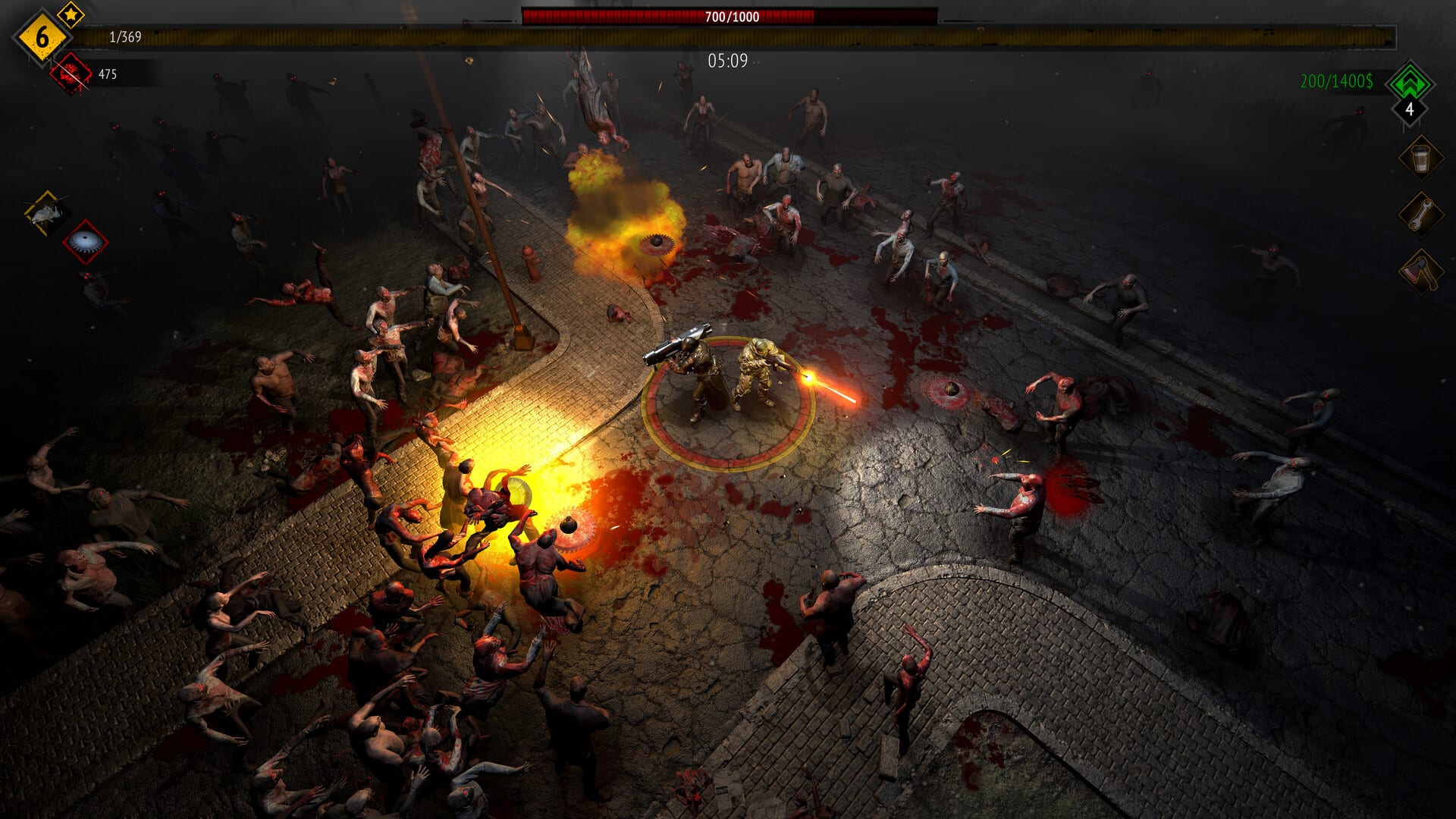
Version 1.0 finally gives Yet Another Zombie Survivors a place to stand that is not Isolated City asphalt. Press coverage calls it The Camp or a Survivors’ Base. In-game and on this wiki it is the HUB: a camp you visit between combat drops, with radio chatter, survivor conversations, and optional missions. It does not replace the twenty-minute dawn. It does not add a fourth squad member. It is a lobby with flavor and a few directed chores. If you only want badges, you can almost ignore it. If Isolated City already feels solved, this is where the studio parked story without turning every restart into paperwork.
The official 1.0 package ships over 1,000 lines of dialogue and mission briefings. The Camp has four sub-locations you can visit, hidden details scattered throughout, and a daily-rotating radio transmission that changes after each run. Survivors in the Camp now chat with each other on various topics. The Camp is framed as the people who lived; the Bio Lab is framed as the place the experiments started.
The mission system
1.0 adds a full quest layer that did not exist in Early Access. There are three mission categories:
-
Main story missions — 15 consecutive missions surfaced through the Briefing Room. The first one becomes available once you complete your first run. Each main story mission advances the central narrative (where the virus came from, who started it) and grants Friendship with the squad present during that run. The named chain runs from Prologos to Release; the spoiler-light list lives on story missions.
-
Survivor personal questlines — 5 missions for each of the 9 survivors, surfaced randomly after each run. Total of 45 personal missions across the roster. Each survivor’s personal arc reveals their backstory and grants Friendship only with that survivor.
-
Repeatable missions — 19 repeatable side quests available after a survivor’s personal questline is complete. Repeatables grant small Friendship bumps every time and are how you push a single survivor’s meter to true max.
All three categories feed the Friendship system, which permanently increases your end-of-run Cash and Specialization bonuses. Story missions grant the largest single Friendship bumps; repeatables grant the smallest.
What you actually do in the Camp
Walk. Talk. Accept a mission if the text is short and the reward is Training, an item, or a reason to play Medic for one night. Listen to radio transmissions if you care why the Bio Lab exists. Then drop back into a run. The correct loop is still: loadout, Isolated City or the next unlocked map, dawn or wipe, refund Training if the tree lied, return. The HUB sits in the comma after the wipe, not in the middle of minute sixteen.
Do not farm the Camp. There is no horde here. If a quest tells you to equip five items, that is a directed combat run using items, not a new minigame. If a quest wants Ranger as leader before she has ranks, decline it and take the same objective as a rescue. The Ranger page explains why that order exists. The Mission Log is the screen where you track every mission and retry ones you cannot finish today.
Story without spoilers
Bio Lab is framed as the place the experiments started. The Camp is framed as the people who lived. This wiki will not paste dialogue. Hover in-game. The mechanical takeaway is simple: story explains why the ring is toxic and why Ranger’s Fear belongs next to high-tech enemies. It does not change SWAT’s rifle line. If a cutscene and a tooltip disagree, the tooltip plus Zombiepedia win. Official leftovers stay on the Trello roadmap.
How quests should change your week
Night 1: ignore the board, take Isolated City Default with SWAT / Engineer / Tank, as Survive until dawn already taught. Night 2: open the Camp, grab one short quest that matches a counter you already wanted (Huntress time, Ghost bosses, Medic kits). Night 3: only take a map quest after that map is unlocked through Default, using the maps walkthrough. Night 4: if a quest wants Bio Lab, read Bio Lab first. The ring is a fail state the city never taught.
Quests that demand Hardcore or Boss Rush are endgame errands. Do city Hardcore with the workhorse squad from How to beat Hardcore before you let a clipboard send you into Boss Rush. The Camp is allowed to be ambitious. Your first week is not.
What the HUB does not do
It does not unlock multiplayer. The game stays a single-player three-person squad. It does not replace Training refunds. Spend and strip nodes on the Training board the way you always did. It does not replace prestige. Prestige is the harder virus you opt into after the normal curve is boring; details live on prestige and Torments. It does not make Bio Lab a first farm. Isolated City still teaches the clock.
If the Camp feels slow, skip the flavor and keep the one quest that pays. The studio sold 1.0 as optional story on purpose. Use that permission. Then go move. The trailer in this article is the studio’s own Early Access presentation of squad combat. Watch it if you need the tone. Do not watch it instead of a dawn.
Frequently Asked Questions
Quick answers to the most common questions.
Do I have to play HUB story?
No. Quests speed meta. Maps, modes, and almost every survivor still unlock in combat.
Is the Camp a multiplayer lobby?
No. Yet Another Zombie Survivors remains single-player with a three-person squad.
How many missions are in the Camp?
15 main story, 45 survivor personal (5 per survivor across 9), and 19 repeatable. 79 total missions.
Where do prestige and Torments live?
On the prestige page in Survivors. The Camp does not replace those opt-in challenges.